Joy is like a spring of water
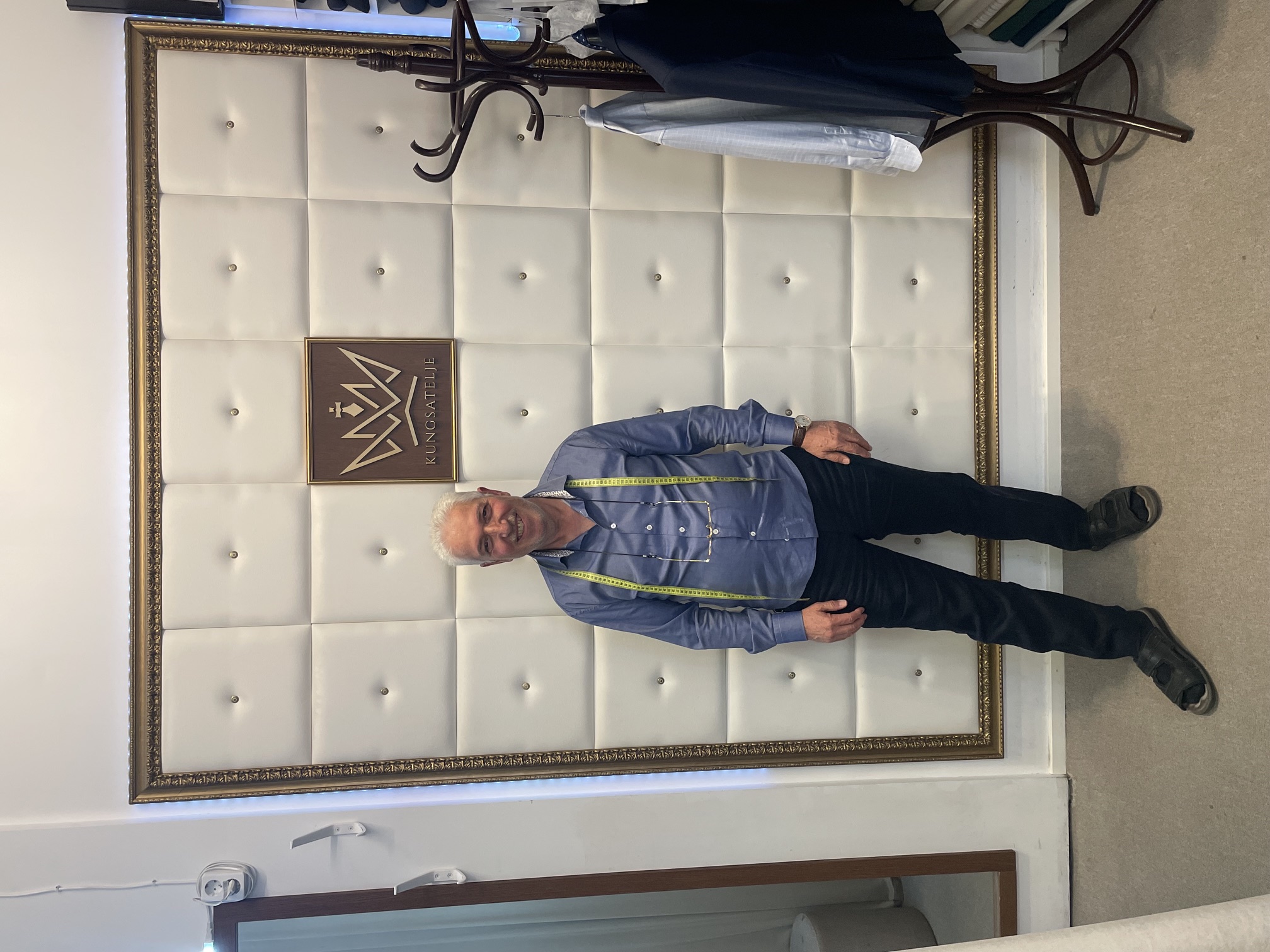
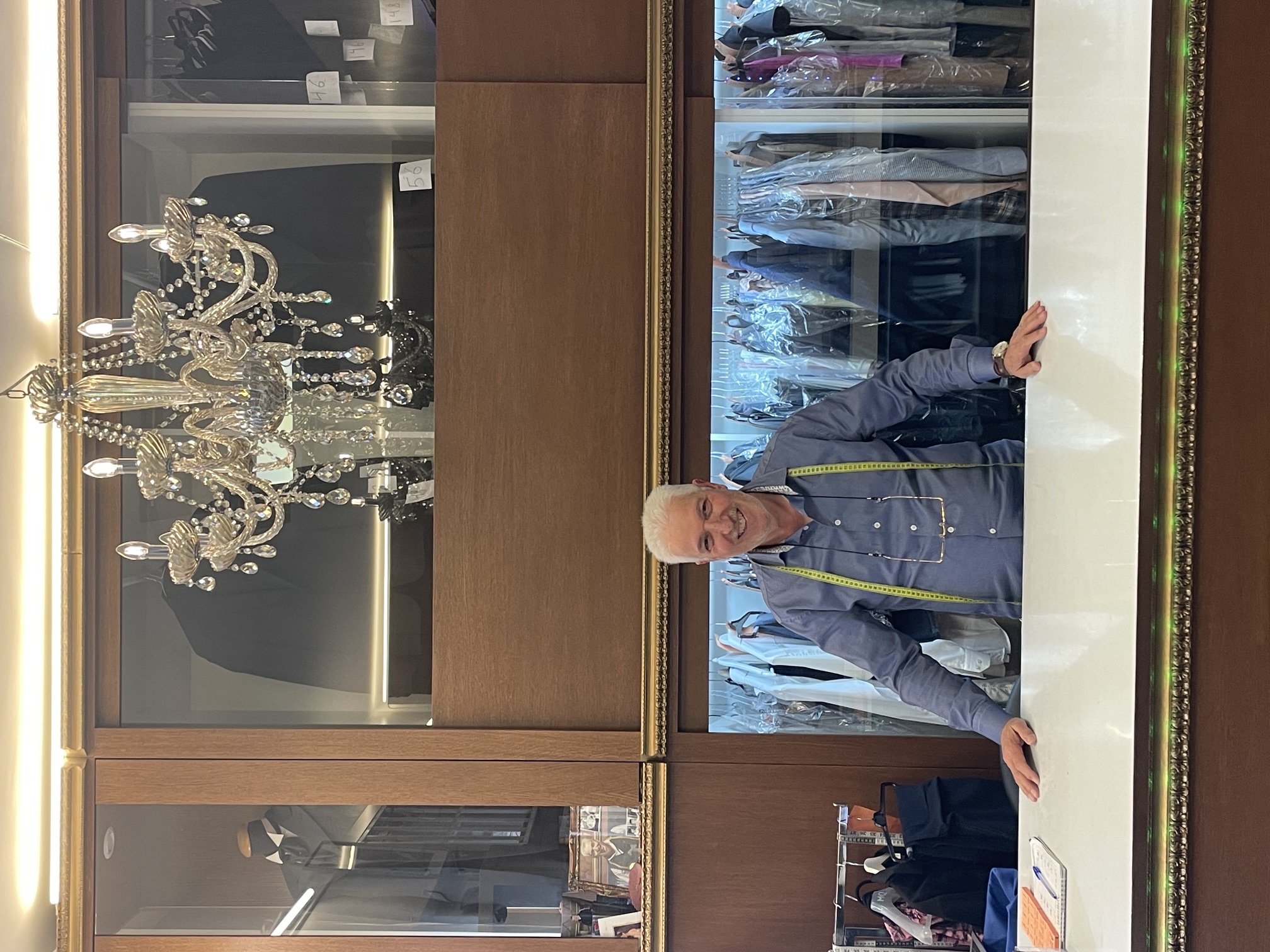
Tailor Said Bahhi has been sewing clothes since 1976. Today, he runs Kungsateljé on Kungsholmen in Stockholm, where three tailors help him with everything from shortening trouser legs to mending wedding dresses. We sat down with him to talk about the craft, his customers and why he believes a good atmosphere is the best business idea.
From apprentice in Syria to running his own tailor’s shop in Stockholm
Said began as an apprentice whilst still a teenager. After three years of training, by the age of 17 he was able to sew an entire suit by hand, and in 1976 he set up his own business in Syria.
He opened his workshop in Stockholm in 1996. He took over a cobbler’s workshop and converted it into a tailor’s shop. He wanted to work and support himself, not live on benefits. His Swedish was limited at first, but three years at SFI went a long way: the customers were patient and listened.
He only advertised once, when he first opened, to let people know there was a tailor in the area they could turn to. The rest took care of itself. People came in, and it was easier to build up a business here than in his home country.
Joy as a guiding principle
It’s the craft that Said is passionate about, not the business. And that craft has a purpose. “I can bring joy to others through my work. That’s my principle,” he says. When a customer gets exactly what they wanted and is happy, then the job is done.
He sees it as a cycle. “Joy is like a spring. The more you give, the more you get.”
The customers notice this. Some would rather wait for Said himself than hand their work over to any of the other tailors in the workshop. He estimates that over nine out of ten customers are satisfied and come back, and that many of them, over time, become almost like friends.
He describes the craft itself as an ocean. “No matter how deep you dive, you’ll never reach the bottom. There’s always more.” What you learn early on stays with you, he says, quoting an old proverb: learning whilst young is like engraving in stone.
According to Said, the hardest part of running your own business is the financial side and the loneliness. The work itself is never the hard part. He can handle that, because he knows what he’s doing.
A craft that’s needed once again
When Said opened his business 30 years ago, there were far more tailor’s shops in Stockholm. Today, their numbers are dwindling as older tailors retire and fewer young people are keen to take up the craft or run their own businesses. At the same time, he has noticed that demand is growing again, not least because more people want to make the most of the clothes they already own.
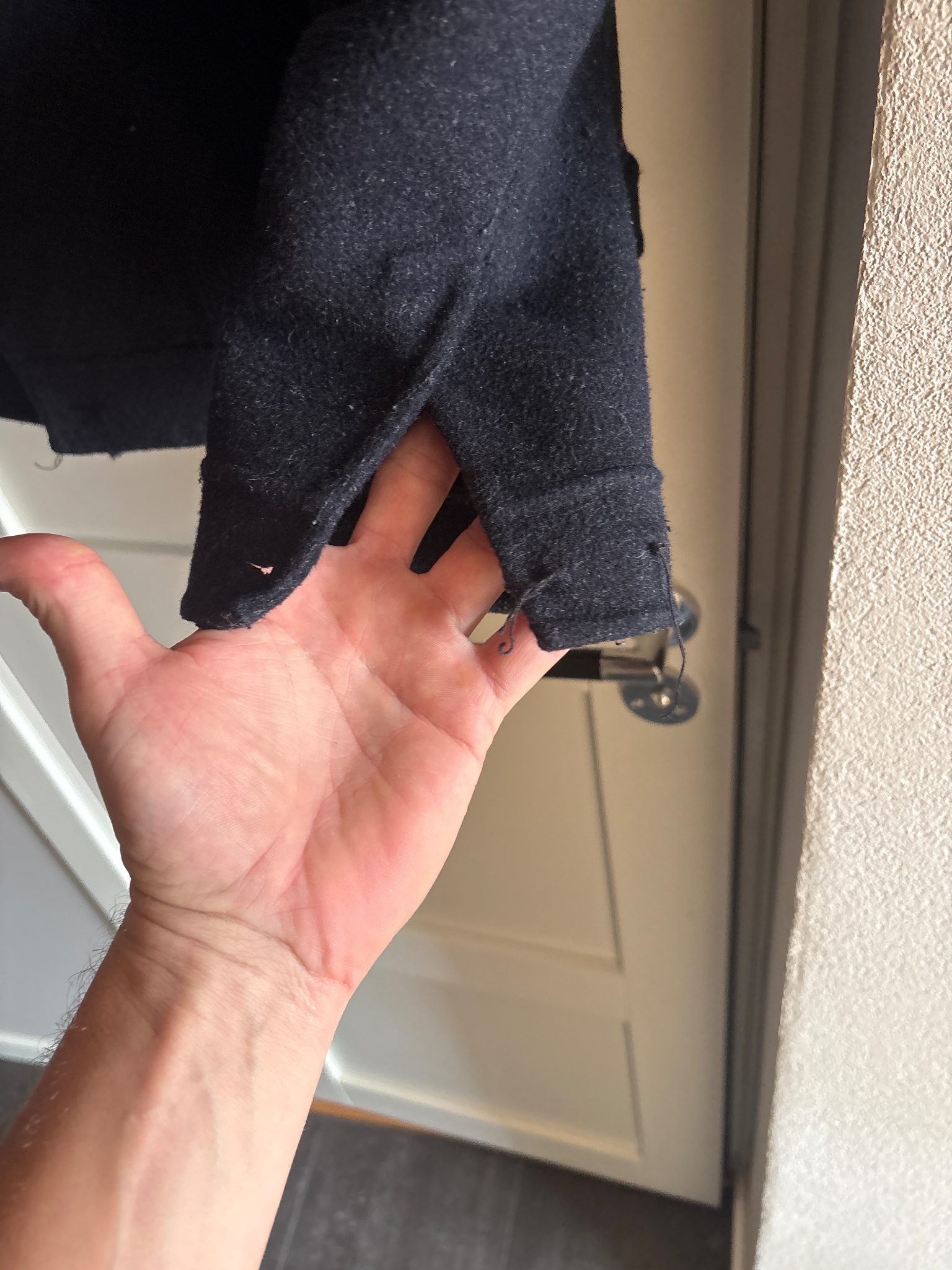
Many people bring in old garments that they’d like to wear again. Said then alters the size and design so that the clothes suit the person wearing them today. His rule of thumb is that almost anything can be sorted out: “I accept about 99 per cent of items.” If a garment cannot be altered as the customer had envisaged, he changes the design so that it remains usable nonetheless.
Here are a few examples of what this might involve:
A customer who has lost 50 kilos and wants to continue wearing their clothes.
A garment that needs to be made bigger. This is possible if there’s room in the seams, or if extra fabric can be added.
Sleeves that need to be lengthened by five centimetres, where a matching fabric from Said’s own stock does the job.
Sometimes, though, he has to say no. If the garment is made of thick leather or something else his machines can’t handle, Said would rather turn the job down. “I don’t want to risk doing something that won’t turn out well.” In that case, he refers the customer to someone who has the right machines and tools.
How it works for you as a customer
Around 90 per cent of the work at Kungsateljé consists of everyday alterations. The rest comprises made-to-measure garments, hire and a small amount of retail. Ties and bow ties, for example, are available as an extra service for anyone needing a finishing touch to their outfit.
New ideas are welcome. Recently, a woman came in wanting a bag and had some lovely fabric with her. Said made one for her. “We can come up with solutions. That’s our first and foremost mission.”
You decide. “I don’t make decisions for the customer.” Said listens first, and whatever can be done, he does. If something isn’t possible, you’ll get an explanation and an alternative.
Email a photo. Many customers get in touch before travelling here – for example, from Jönköping – to ask whether a garment can be altered. It usually works out. Size and design can be changed.
The price depends on the time taken. Said rarely gives a fixed price in advance, as it depends on how long the job takes. If it takes half an hour, he charges for half an hour, regardless of how big the garment looks.
It’s best to start small. Many new customers test the quality with a small job and then come back with larger ones.
Said’s advice to other tailors
After 50 years in the trade, Said has a number of principles he sticks to.
Promise a little less than you can deliver. “If the customer asks, I don’t promise the very best. I promise a little less. Then, when it turns out to be more, the customer is happier.”
Keep the slips organised. Serial numbers, sorting, dates and prices must always be clearly stated. Everyone in the workshop should be able to answer the customer’s questions, and even if each person works slightly differently, the basic approach should be the same.
Only take on jobs you can do well. Better to have a satisfied customer who gets help from someone else than a garment that turns out only half-decent.
Put new tailors through their paces. Said lets them work in the workshop and quickly assesses their standard. If he’s satisfied, he raises the bar a little. “I’m lenient with everything, except when it comes to the test.” According to him, adverts placed through the Job Centre have rarely yielded tailors of the same calibre.
Keep the old and add the new. In 2016, he restructured the business together with his nephew, a researcher who knows a great deal about textiles. They kept what had worked and revamped the rest. The older customers stayed, and younger ones come in and say “wow”. “Experience and new knowledge. That’s the key.”
Expect the odd dissatisfied customer. According to Said, Kungsateljé has several hundred five-star reviews on Google, but also a handful with just one star. “No matter what you do, they’re bound to be there.”
And on the subject of principles, in Said’s own words: “If you have no principles, things go up and down all the time, and then a lot goes wrong.” With them, things rarely go wrong.
How customers find us
Most new customers come via recommendations. Sales assistants in the shops where customers buy their clothes often write down Kungsateljé’s name, address and telephone number and say “go there”. They have been using the workshop for several years, and their customers are satisfied. That works out well for both parties. Other tailors sometimes pass on garments they haven’t been able to handle, and Said has also appeared on a programme on TV4.
At the same time, he sees new opportunities online. “There are customers who come via digital channels. They Google, they browse, they look at websites.” He believes this could be a good way to reach new customers in this new era.
At least another ten years
Said wants to carry on for at least another ten years, as long as his health holds out and he can still stand on his own two feet.
Kungsateljé is located at Sankt Göransgatan 65 on Kungsholmen in Stockholm. Further information is available at kungsatelje.se.